
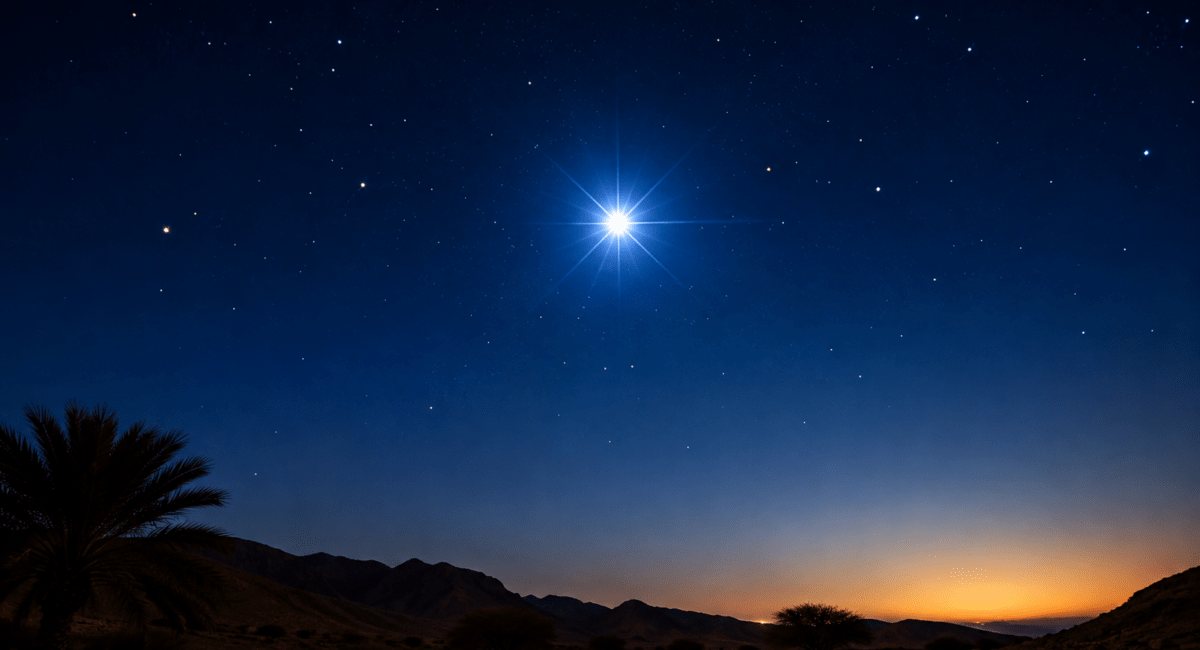
Suhail’s Appearance Signals End of Peak Summer Heat in Saudi Arabia
RIYADH — The appearance of the star Suhail on the southern horizon before dawn on Monday, Aug. 24, marks a traditional seasonal sign associated with the gradual end of summer and the approach of cooler weather across the Arabian Peninsula.
Suhail, one of the most anticipated stars in Arab culture, has long been regarded as an indicator of the transition from the intense summer heat toward more moderate conditions. Its annual appearance is closely associated with seasonal changes, particularly in the desert regions of the Arabian Peninsula.
Majed Abu Zahra, president of the Jeddah Astronomy Society, said Suhail’s appearance shortly before sunrise coincides with the beginning of a transitional period. During this period, the intensity of summer heat gradually declines, nighttime temperatures begin to moderate, and the angle of the sun’s rays changes as Earth moves closer to the autumnal equinox.
Abu Zahra explained that Suhail was historically considered a positive seasonal sign by Arabs. Its appearance coincided with a gradual reduction in the angle of the sun’s rays, shorter daylight hours, and lower temperatures during the late-night and early-morning periods.
Internationally known as Canopus, Suhail is the second-brightest star visible in the night sky after Sirius. It is located approximately 310 light-years from Earth and has held an important place in Arab culture since ancient times. Its appearance was traditionally used by people across the Arabian Peninsula as a seasonal marker signaling the beginning of a new period of the year.
The star has also become popularly associated with a reduction in the intensity of summer heat and changing weather conditions. However, Abu Zahra clarified that Suhail itself does not cause changes in Earth’s weather because of its enormous distance from the planet.
Instead, its appearance coincides with the natural seasonal changes caused by Earth’s movement around the Sun and the tilt of its axis. These astronomical changes gradually influence sunlight, daylight duration, and temperatures as the region moves toward autumn.
Source:Saudi Gazette